
High-density rack power
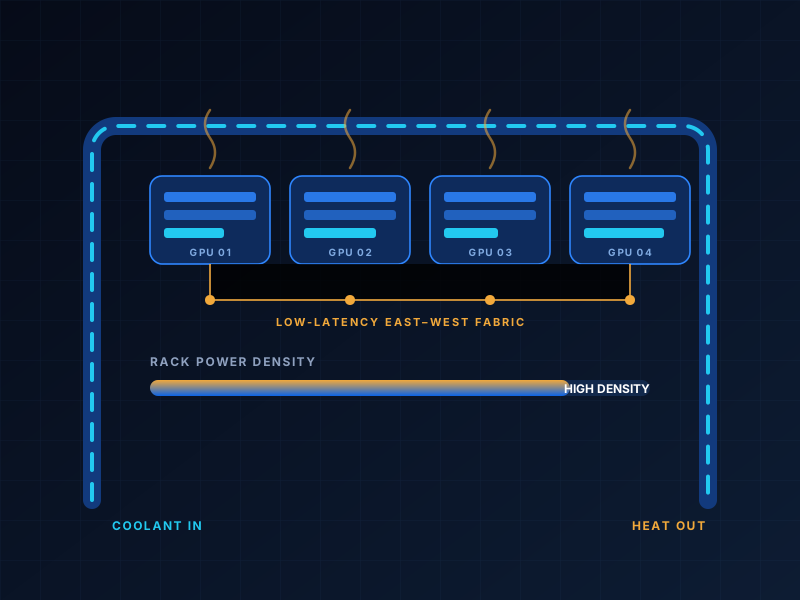
Built to support high-density power loads per cabinet, with distribution and metering designed for accelerated compute rather than retrofitted onto a general-purpose floor.

Artificial Intelligence and Machine Learning applications demand a complete rethink of data centre capacity, power density and thermal management. A cabinet designed for general enterprise compute cannot absorb an accelerated node without hitting a power or thermal ceiling first.
Webyne approaches AI capacity as a design problem rather than an upgrade — sizing power, cooling, interconnect and storage together so a cluster performs at the density it was specified for.
Each layer constrains the next. Designing them in isolation is what causes stranded capacity.
Built to support high-density power loads per cabinet, with distribution and metering designed for accelerated compute rather than retrofitted onto a general-purpose floor.
Precision cooling designed for high-TDP GPU nodes, including liquid-assisted options where air alone cannot carry the thermal load.
High-speed internal interconnects for distributed AI training models, keeping east-west traffic deterministic across the cluster.
NVMe-backed storage tiers sized to keep accelerators fed rather than waiting on I/O.
Capacity models that expand from a pilot cluster to large data-model deployments without redesign.
Single-tenant zones with audited physical and logical access for sensitive model and dataset workloads.
We size deployments against the workload profile rather than a single generic GPU tier.
Straight answers on density, cooling and commercial models.
Density is agreed per deployment against the cooling method and power topology available in your zone. High-density cabinets are provisioned in designated areas rather than spread across a general-purpose floor, which is what keeps the thermal envelope predictable.
Yes. Liquid-assisted cooling is deployed where high-TDP nodes make air cooling impractical. The right approach depends on your hardware generation and expected sustained utilisation, so we assess this during design.
Yes. Deployment models are designed to expand from a pilot cluster to a full production footprint without re-architecting power, cooling or interconnect.
The fabric is designed for low-latency east-west traffic, which is the dominant pattern in distributed training. Interconnect topology is agreed as part of cluster design.
Accelerated nodes draw more and reject more heat than general enterprise compute. Designing the three together is what prevents stranded capacity.
Share your accelerator type, node count and utilisation profile — we will come back with a density and cooling plan.